Corusen

John Shin & Jeff Lee, Co-Founders

Lewisville, Texas
Corusen co-founders and creators of the Accupedo app Jeff Lee and John Shin, set out to build a simple walking app which is used by millions around the world today. Accupedo is a free pedometer app from wearable computing company Corusen that helps users work toward their daily step goals with accurate tracking and an easy-to-read UI.
Where motion meets meaning

Back in 2010, when Fitbit was still in its infancy, before Apple Watch kept after you to close those rings, and Strava hadn’t yet turned movement into a competitive leaderboard, there were two robotics researchers, John Shin and Jeff Lee. They were the kind of folks who think in terms of motors, gears, and sensors, and who spend all day focused on what they refer to as “raw motion signals,” or, for the rest of us, the sensor data a smartphone picks up when its owner moves from point A to point B.

“We studied robotics, so we understood how machines move, and how humans move too,” John explains.

At the time, early versions of smartphones didn’t offer the step tracking that we all take for granted these days. So, if you wanted a pedometer app, you’d have to build it yourself, by taking signals from the accelerometer in your phone, then somehow interpreting them as motion, and then converting them into steps. Not to mention, make it accurate for all ranges of gaits and speeds, and account for all the various places people can keep their phones during this whole process.

No easy feat… unless, of course, you happened to be an expert in motion and sensors.

So that’s exactly what Jeff and John, the co-founders of the robotics and wearable computing company Corusen, set out to do. “We had to process the raw signal ourselves and turn it into a walking pattern,” John says.

That laid the groundwork for what would eventually become the iOS and Android app that’s Accupedo today, a name that stitches together the first parts of the words “accurate” and “pedometer.”

The goal for Accupedo: help people stay active, and keep them moving by seeing their progress in real time.

And it worked. The app quickly caught on across Asia and Europe, drawn in by its simple and easy-to-read UI, reaching millions at first, and eventually hitting 10 million downloads today, each one with a different story behind it.

Take this one user, who shared with John and Jeff, “how he was in rehab, and used the app to track his recovery,” John mentions. “He told us that seeing his progress every day motivated him to keep going.”

For someone in recovery, that kind of feedback can make all the difference. Healing from a critical injury is often uneven and painfully slow, with starts and stops. Sometimes it’s hard to tell whether anything is even changing at all.

But when you get to see your step count tick up, day by day, it has a way of making progress more tangible, and more real.

And for John and Jeff, hearing that kind of story about how their app had helped someone like that was an encouraging reminder that Accupedo, as simple as it may sound, can change someone’s life.
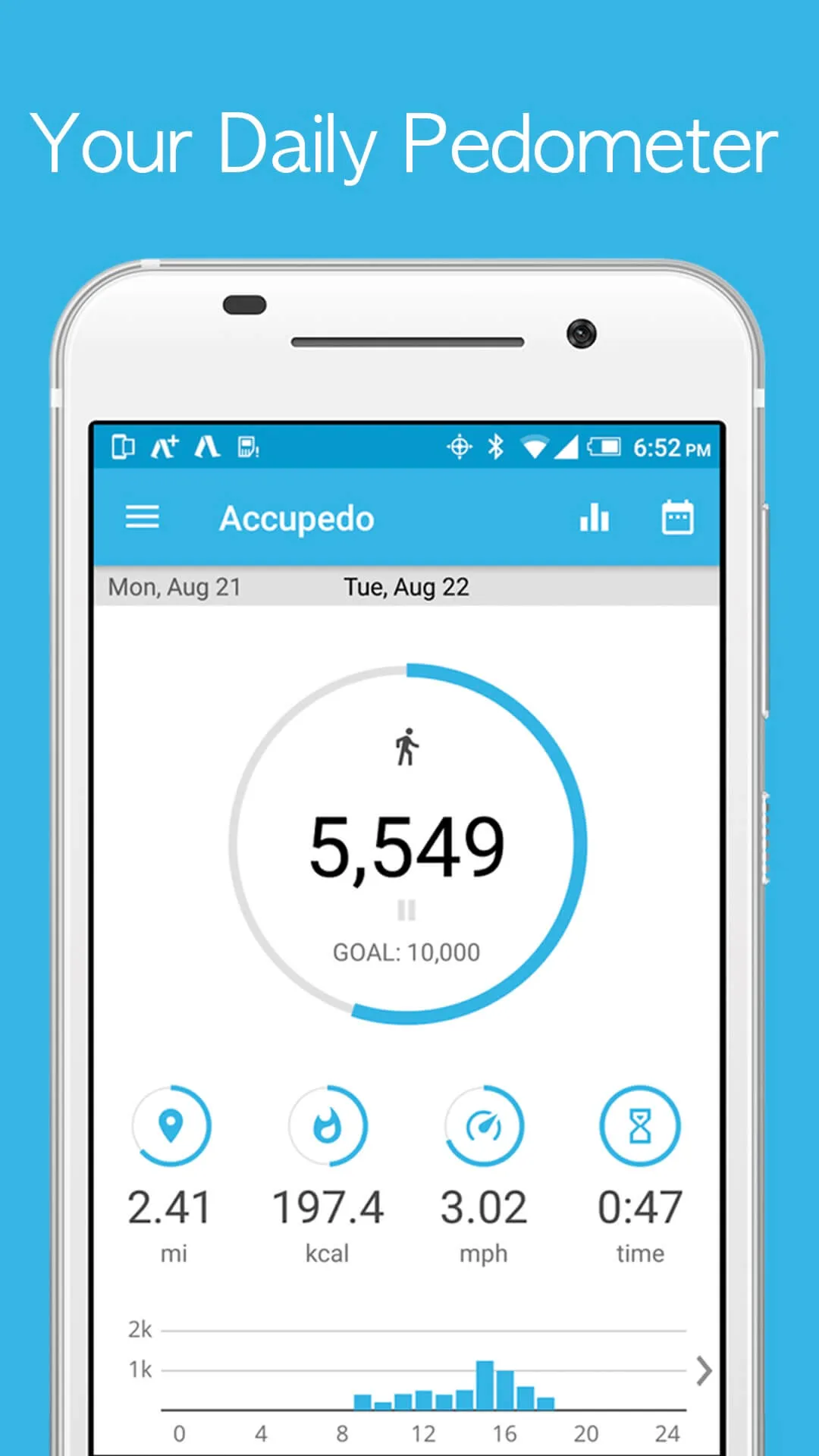

A screenshot of how Accupedo helps users track steps, distance, calories, and time.
What keeps things moving

In order to help as many folks as they possibly could, they were intentional about the business model that would underwrite the app, setting the price tag for the app to zero from the start, so that anyone who needed it could get their hands (and feet) on it.

“We wanted to make the app accessible to more people,” John elaborates. “The best way was to make it free.”

But then, as any indie developer is quick to tell you, it takes a lot of work (and money) to launch and support an app like theirs.

So, naturally, that led Jeff and John to an ad-supported model for Accupedo, which then steered them to picking Google AdMob as their preferred ad provider. “It was easy to implement, and it offered different styles that worked well for us,” Jeff says of AdMob.

But the duo is also quick to share the monetization lessons they’ve learned along the way: just because an ad platform offers you all these formats to pick from doesn’t mean you should throw them all into your app.

“You need to strike a balance,” John cautions. “If ads are too aggressive, users complain. So we try to optimize the experience.”

Even so, ads have been crucial to Accupedo’s success, and, to some extent, Corusen’s success as well. In fact, ad revenue is a big source of income for the app, and helps to support a team of engineers working across Corusen’s various projects, all working to build more useful technology for people.

“We wanted to make the app accessible to more people. The best way was to make it free.”
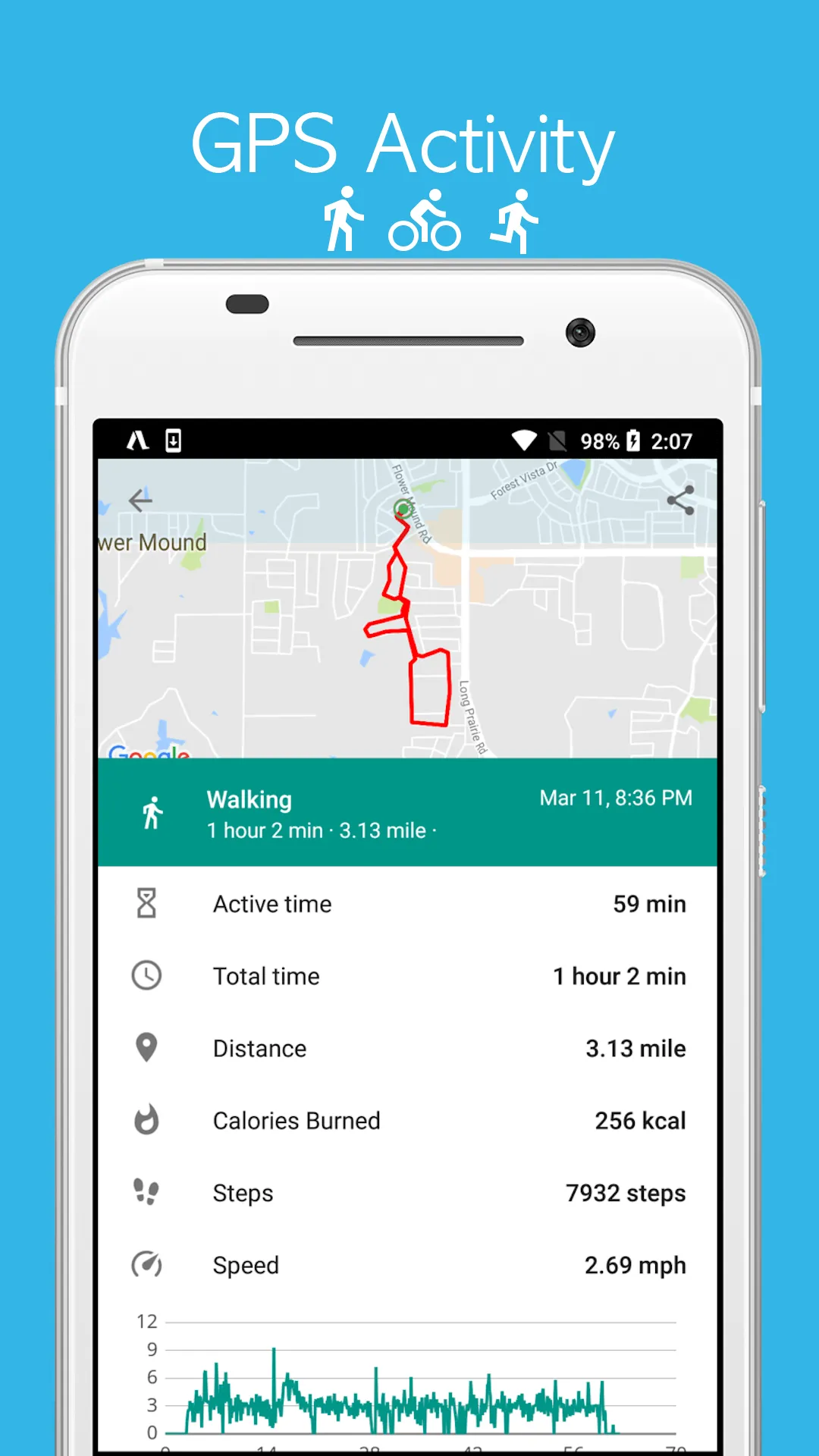
Accupedo’s GPS Activity feature gives walkers a way to view their route, speed, mileage, and step count.
Next steps

It’s already been over 15 years since Accupedo made its debut, and the world has become such a different place now, especially when it comes to technology.

Movement tracking is pretty standard on a smartphone now, data that can be easily shared with friends in the spirit of humble bragging or perhaps friendly competition, and instantly analyzed to help us understand how we move, and why.

The software development field, with its shift toward what many call “vibe coding,” where AI generates much of the code now, has also been turned upside down. “These days, AI tools can help you build apps much faster,” Jeff highlights.

And the duo, still researchers and tinkerers at heart, have already started putting AI to work for Corusen at large and Accupedo itself, from debugging to interpreting user behavior analytics.

“We want to understand just what users are doing, what they need,” Jeff explains. “Are they someone who wants a lot of motivation, maybe with a set of personalized notifications? Or are they someone who prefers to be left alone for the most part in their walking habits, with no prodding from our app whatsoever?”

“Another idea we’ve been thinking about is analyzing walking patterns,” John says, his excitement showing. It’s something he and Jeff had wanted to put into Accupedo for a long time coming; they just didn’t have the tech to do it properly, until now. “Your gait can actually tell you a lot about your health,” he adds.

And at the end of the day that’s what Accupedo is all about: yes, it’s about counting steps, but it’s also about helping people take them.

About the Publisher

John Shin and Jeff Lee, co-founders of Corusen, the robotics and wearable computing company behind a pedometer app called Accupedo is known for its simplicity as well as for its accuracy (it’s in the name after all). With backgrounds in robotics research, the duo built one of the earliest step tracking apps by translating raw motion signals (the data each smartphone fetches as its owner moves around in the physical world) into meaningful insights. Today, they continue to maintain Accupedo with the help of AI, charting a new course that focuses on personalization in order to help users take their next steps toward healthier lives.

Corusen co-founders Jeff Lee and John Shin built Accupedo to make step tracking simple, accurate, and made free thanks to an ads-based business model.